
Who I Am and How I Help – Dr. Paweł Błaszczyszyn
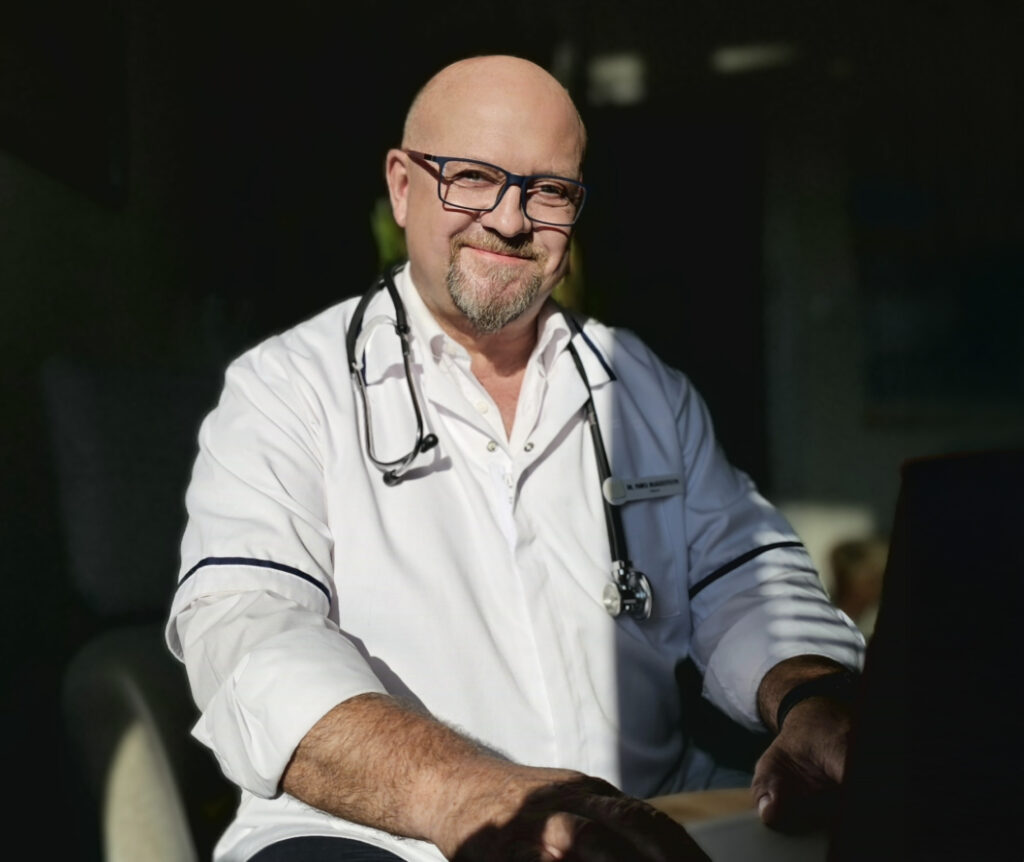
My name is Paweł Błaszczyszyn, and for over 35 years I have been devoted to what forms the foundation of well-being – the healthy functioning of the spine, the intestines, and the entire body.
In my practice, I combine the best of classical and natural medicine: chiropractic, manual therapy, acupuncture, and proven methods of health prevention.
I graduated from the Faculty of Medicine at the Medical University of Warsaw in 1993 and hold full medical practice rights in the Republic of Poland.
My natural medicine clinic is a place where patients often say: “Doctor, I can finally stand up straight, sleep peacefully, and live normally again!” These words are the greatest reward for me and a confirmation that a holistic approach to health truly works.
I have performed tens of thousands of consultations and treatments, and I am still amazed by how much the human body can do — if only we create the right conditions for it to heal itself. I often tell my patients: “My task is to remove the obstacles — your task is to let your body return to balance.”
I don’t believe in quick fixes or “magic pills for everything.” I believe in wisdom, patience, and consistency. My goal is not only to bring relief from pain but also to teach how to take care of your spine, digestion, and overall well-being every day — so that the results of therapy are lasting.
Outside my clinical work, I love sharing knowledge.
I give lectures and run educational meetings where I explain complex topics in natural medicine in a simple and approachable way — sometimes with a touch of humor. Because health is not only about seriousness and routine — it’s also about joy, vitality, and laughter, which can heal just as much.
If you are looking for an experienced specialist in chiropractic, manual therapy, or acupuncture, I invite you to my clinic in Warsaw. When something aches, rumbles, clicks, or keeps you awake at night — it’s a sign that together we can look for the cause and restore your body’s natural balance.
“My task is to remove the obstacles — your task is to let your body return to balance.”
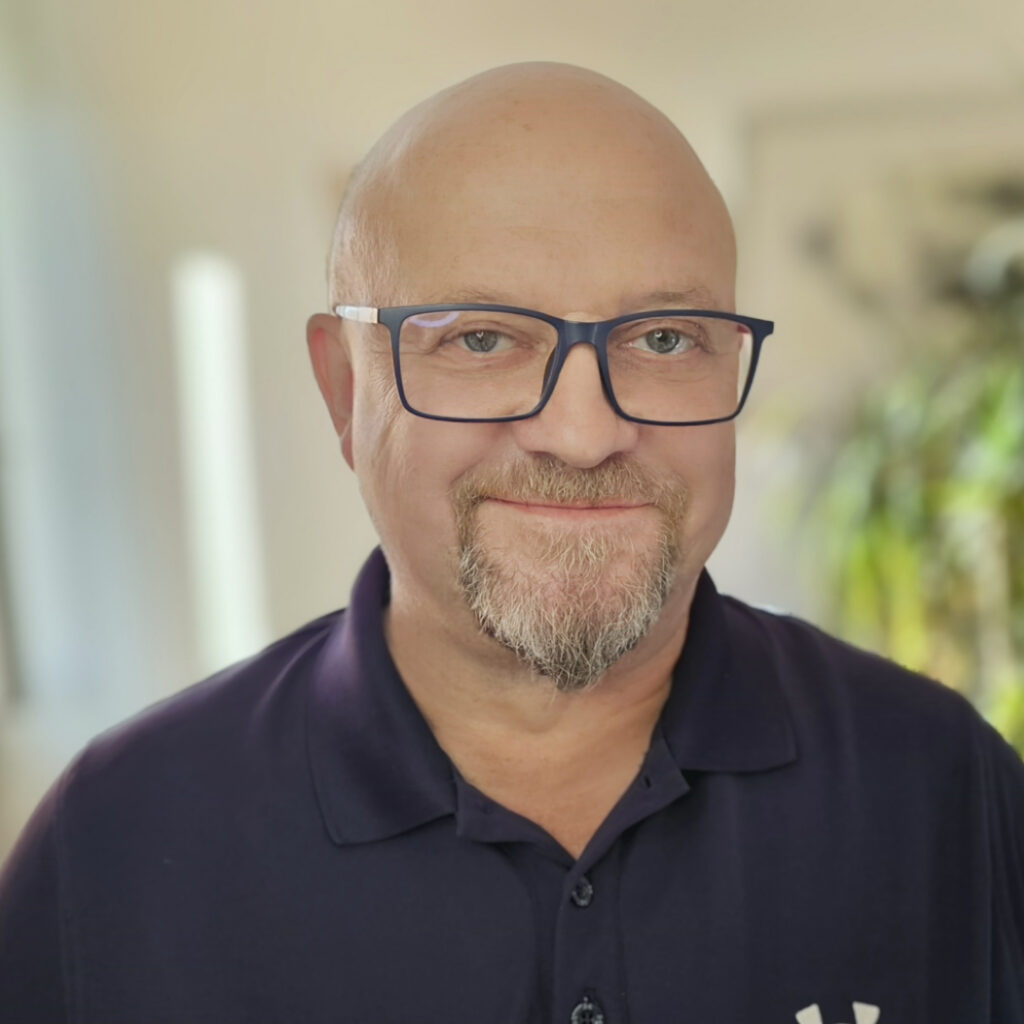
Doctor of Body and Soul.
On healing that reaches deep within
A conversation with Dr. Paweł Błaszczyszyn, founder of the KOMED Medical Center in Warsaw.
Dr. Paweł Błaszczyszyn – a doctor by calling and passion, founder of the Warsaw-based KOMED Center for Holistic Medicine. In his work, he combines modern medical knowledge with deep respect for the spiritual and psychological nature of the human being. He draws inspiration from the philosophies of Jung, Frankl, Gabor Maté – and above all, from the real stories of his patients.
Holistic medicine in practice
Editorial team: Doctor, today’s medicine is technologically powerful, yet many patients feel unheard and unseen. How do you, as a physician, find yourself within this landscape of modern medicine?
Dr. Paweł Błaszczyszyn: I will answer with the words of Albert Schweitzer: “Each patient carries his own doctor within. We must help him find that doctor.” From the very beginning of my path, I knew I didn’t want to be just a “repairman.” A doctor is not a technician — he is a guide. I meet a human being who suffers, who often loses hope. And that suffering calls not only for intervention, but for understanding.
Disease as a message
Editorial team: So the key is not only what the patient feels, but why?
Dr. Błaszczyszyn: Exactly. Gabor Maté emphasizes that disease is not a biological error, but often the body’s response to something too difficult to process — chronic stress, suppressed trauma, or a life lived against oneself. Illness is not the enemy; it is a message. My role is not merely to silence it, but to understand what it is trying to say.
“The greatest mistake in the treatment of diseases is that there are physicians for the body and physicians for the soul, although the two cannot be separated.”
— Plato
KOMED Center – A Space for Healing
Editorial team: So KOMED is not just a traditional medical center?
Dr. Paweł Błaszczyszyn: KOMED is a place where a person can stop fighting for a moment and start listening to themselves. I created it to heal not only the body but also the patient’s “inner world” – their beliefs, emotions, and life story. I am inspired by Jung’s approach, who believed that true transformation is born within the human being.
Methods and Tools of My Work
Editorial team: What tools help you reach that depth?
Dr. Błaszczyszyn: Time, attentiveness, and dialogue – these are fundamental. I also use therapies that regulate the nervous system, micro-nutrition, mitochondrial medicine, and detoxification therapies. I look at the person as a whole. Diagnostics are important, but equally important is the question: “When was the last time you were yourself?” – as Thomas Moore wrote. Sometimes the greatest healing comes from allowing oneself to be authentic.
Healing as an Inner Process
Editorial team: So healing is, above all, an inner process?
Dr. Paweł Błaszczyszyn: Yes. Viktor Frankl – a psychiatrist who survived a concentration camp – observed that a person can endure anything if they have meaning. So even illness can lead to profound transformation. Instead of asking only “How can I be cured?”, it is worth asking “What is this illness trying to teach me?” – and that’s where the real work begins.
Illness as an Opportunity
Editorial team: Do you meet patients who, through illness… actually regain their lives?
Dr. Paweł Błaszczyszyn: Very often. People slow down, they stop rushing. They begin to listen to their bodies, their emotions, their relationships. Many say: “For the first time in years, I truly felt myself.” That is a breakthrough moment – when a person returns to themselves. Not always to health in the medical sense, but to coherence and meaning. And then, physical health often follows naturally.
The Doctor–Patient Relationship
Editorial team: That requires a great deal of trust between doctor and patient.
Dr. Paweł Błaszczyszyn: Yes – and humility on the doctor’s part. I am not all-knowing. Sometimes it is the patient who brings the answer. My role is to create the conditions in which they can hear it. Ram Dass once said that “we’re all just walking each other home.” The meeting between doctor and patient is a meeting of two souls, not two roles.
Inspiration for Daily Work
Editorial team: What inspires you most in this work – as a human being?
Dr. Paweł Błaszczyszyn: The courage of my patients. Their willingness to search, to ask questions, and sometimes to fall apart only to put themselves back together. The work of a doctor can be a deeply spiritual path – if we are willing to see a person, not just a clinical case. Every day, I learn this from my patients.
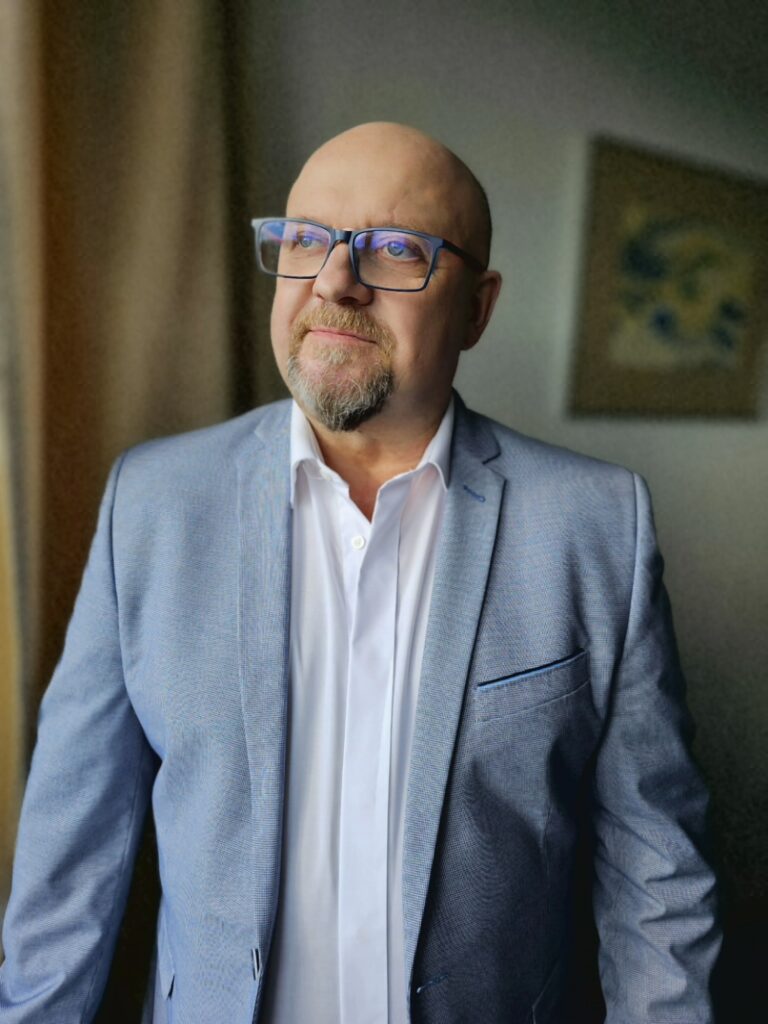
“The body says what the soul is afraid to speak.”
– Louise Hay
"Healthy Gut, Healthy Life" – an interview with Dr. Paweł Błaszczyszyn
Editorial team (R):
To begin with — what does a healthy gut mean to you?
Dr. Paweł Błaszczyszyn (P):
A healthy gut means, above all, a well-functioning microbiome — a rich, diverse, and balanced community of bacteria that support digestion, immunity, and the overall well-being of the body. When this balance is disturbed — the so-called dysbiosis — it can lead to a wide range of ailments, from bloating and abdominal pain to systemic health problems.
We could say that we have a kind of “pact” with nature. Our digestive enzymes and beneficial bacteria break down food into what’s known as nutrient milk — a fluid containing the basic building blocks of our body, such as amino acids. From these — like “bricks from demolition” — the body rebuilds and repairs its own structures. In contrast, harmful bacteria and parasites draw energy from us without giving anything in return.
Individual Gut Diagnostics
R: On your “Healthy Gut” website, we see that you offer a wide range of diagnostics — from SIBO tests to food intolerance testing. How do you tailor diagnostics to each patient?
P: That’s right. The “Healthy Gut” Center in Warsaw offers, among others, SIBO tests (hydrogen and methane), Helicobacter pylori testing, and lactose, fructose, sorbitol, xylitol, and glucose intolerance tests, among many others. I always recommend a holistic approach: it begins with a detailed interview, assessment of symptoms, and an understanding of the patient’s lifestyle. Based on that, we select precise diagnostics — for example, a SIBO test if a patient reports bloating, abdominal pain, or irregular bowel movements. Only when the data points to a specific problem do I recommend the appropriate test and, if necessary, treatment.
Most Common Tests
R: What tests do you recommend most often, and how do you interpret the results?
P: We usually start with basic panels such as “Borlamed Parasites + Valida Intestinal Microflora”, which provide a comprehensive assessment of the gut microbiome and the presence of parasites. I always interpret results in the context of the patient’s symptoms. If the test confirms SIBO, I propose targeted therapy, diet, and probiotics. If we detect parasites or Candida, I implement appropriate treatment and supplementation. For me, diagnostics are not only about “what,” but most importantly about “why” — and that’s the key to effective healing.
Holistic Treatment and Personalized Therapy
R: So you advocate a model of holistic diagnostics and personalized treatment?
P: Absolutely. Treatment always begins with understanding the patient — their history, lifestyle, eating habits, and psychosomatic tensions. I practice integrative medicine, combining laboratory diagnostics, dietary education, manual therapies, herbal medicine, and visceral massage. I’m not only interested in the symptom — what matters most is the cause. This approach allows for lasting results.
Diet and Lifestyle
R: How do you see the role of diet and lifestyle in gut health?
P: It’s absolutely fundamental. I’ve been a vegetarian for 25 years — a choice that comes from nutritional awareness and a holistic approach to health. I promote a diet rich in prebiotics, minimizing processed food, and regular physical activity. I personally practice tai chi, cycle, and ski. Movement supports intestinal motility and reduces stress — both of which directly influence the microbiome.
Supporting the Gut Microbiome
R: Patients often ask how to support gut flora. What do you recommend?
P: I recommend focusing on three pillars:
- Diet adapted to individual needs and symptoms — rich in fiber from vegetables, with fermented products and limited simple sugars.
- Probiotics selected for the specific condition, e.g. SIBO, IBS, or candidiasis.
- Prebiotics and postbiotics — used when appropriate.
Additionally, manual techniques such as abdominal massage can be very helpful, as they support intestinal motility. Therapy should always be personalized.
Symptoms That Should Not Be Ignored
R: To conclude: what message would you give to people struggling with digestive issues?
P: We should never ignore gut symptoms — they are often the beginning of more serious problems. Conditions like SIBO can coexist with or contribute to other disorders, such as Hashimoto’s disease, joint and muscle pain, headaches (for example, from histamine intolerance), skin issues, and hair loss. About 80% of serotonin is produced in the intestines, so its deficiency may lead to depression, fatigue, anxiety, and emotional imbalance. Allergies, infections, sleep disturbances, malabsorption, nutritional deficiencies, and syndromes such as IBS and “leaky gut” are also common.
The most important thing is to look for the cause, not to mask the symptoms. Holistic, personalized diagnostics, combined with a proper diet and healthy habits, are the path to lasting health. As a physician and advocate of integrative medicine, I always support my patients on this journey.
Contact
KOMED – Center for Natural and Integrative Medicine
Phone for registration:
22 628 74 82
Mobile:
510 788 358
Email:
blaszczyszynpawel65@gmail.com
dorota.blaszczyszyn@gmail.com
Address:
34/50 Marszałkowska St., Unit 28
00-554 Warsaw, Poland
How to Get Here
Public Transport
Metro: Politechnika Station (Line M1) – about a 5-minute walk.
Trams: Lines 4, 15, 18, 35 – Plac Konstytucji stop, right next to the gallery.
Buses: Lines 131, 151, 501, 519, 522 – Plac Konstytucji stop.
By Car
Entrance from Marszałkowska Street. Paid city parking available (SPP zone)..
In navigation, enter: Galeria MDM, Marszałkowska 34/50, Warsaw.
On Foot / By Bike
From the city center (Rondo Dmowskiego) – about a 10–12 minute walk toward Plac Konstytucji.
Bike racks and a Veturilo city bike station are available near Galeria MDM.

Contact
34/50 Marszałkowska St., Unit 28
00-554 Warsaw, Poland